

The short-term rental market in Italy closed 2024 with a total economic impact of €66 billion: €13 billion from direct bookings, €52 billion from secondary tourism spending, and €1 billion from renovations. With 691,961 registered properties (87% of which are already compliant with the CIN – National Identification Code), the sector stands as a cornerstone of the national tourism economy.
However, 2025 marked a turning point. Following years of rapid expansion, the market has entered a consolidation phase that rewards professional management while penalizing improvised operations. Looking ahead to 2026, the data from this past year reveals how the landscape has shifted and where the industry is headed.
Table of Contents
From Boom to Consolidation: The Numbers Behind the Contraction
2025 AirDNA data indicates a natural market slowdown:
- Active listings (June–August 2025): ~508,000 vs. 522,000 in 2024 (-2.7%)
- National occupancy rate: 64% vs. 65% the previous year
- Decline by city: Florence -20%, Rome -9%, Milan -8%
Why is the market consolidating?
.1
.2
.3
At the same time, the surge in operating and bureaucratic costs is eroding margins for amateur hosts. Meanwhile, demand is becoming more discerning: with a decline in German tourist flows and stiff competition from destinations like Greece and Spain, today’s travelers are seeking absolute quality.
Rather than a crisis, we are witnessing a natural selection where professionalism has become the sole requirement for surviving this market evolution.
Short-Term Rentals in Italy: Where Profitability is Highest
The regions with the highest number of properties are Tuscany (80,354), Lombardia (72,187), Lazio (66,729), Veneto (63,175), Puglia (57,701), and Sicily (54,756). However, the numbers tell different stories.
The Most Profitable Cities (Average Annual Revenue):
- Venice: €26,250 (Premium pricing driven by international demand)
- Florence: €23,067 (Art city status, but facing increasing saturation)
- Rome: €19,530 (High volumes, average stay of 3–4 days)
- Milan: €11,584 (High turnover, short-stay business travelers)
Professionalization: The Trend Redefining the Sector
What does professionalization mean?
Technology: Implementation of channel managers and dynamic pricing.
Defined Processes: Automated check-ins and scheduled professional cleaning.
Regulatory Compliance: CIN (National Identification Code), tax, and insurance adherence.
Consistent Quality Standards: Professional linens and impeccable cleaning services.
Professional Property Managers: The Competitive Advantage
Greater Visibility: Optimized listings and professional photography.
Higher Reviews: Defined processes lead to a consistent and reliable guest experience.
The role of the property manager is becoming central. Those managing 5 or more properties can no longer afford to operate on a “part-time” or amateur basis.
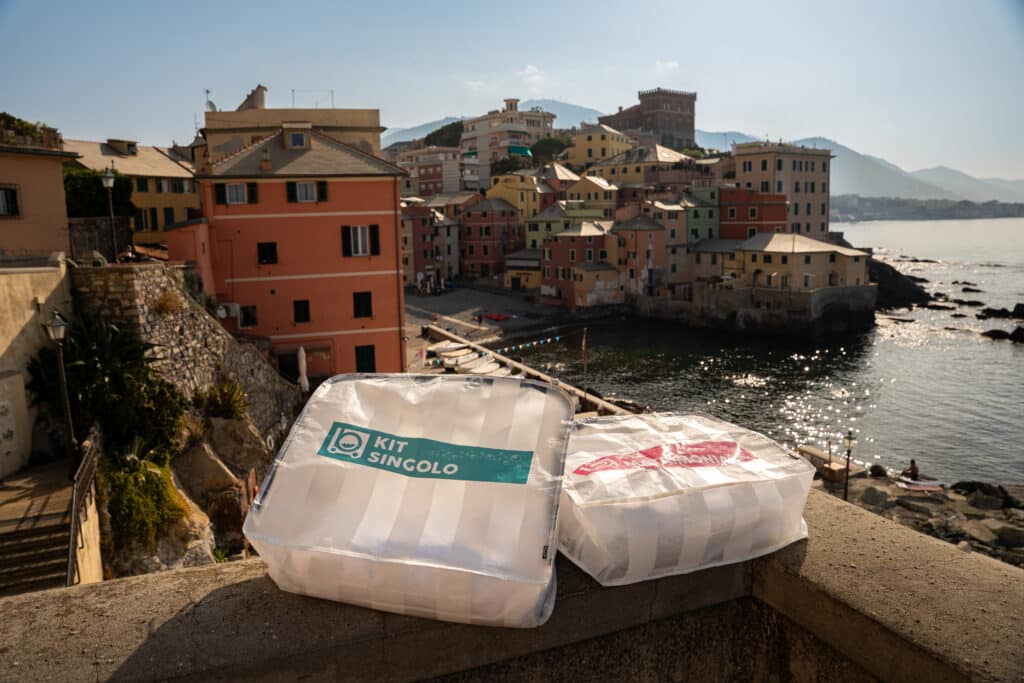
Quality pays off Quite literally. Services like bnbkit, which provides linen rental with scheduled delivery to hundreds of properties across Italy, allow hosts to guarantee consistent standards without the burden of managing inventory and laundry. As guest expectations rise, delegating critical operational areas becomes a true competitive advantage.
Outlook 2026: Trend to Watch
Ongoing Natural Selection
Milan-Cortina 2026 Olympics
February 2026 is presenting a massive opportunity for Northern Italy: Milan, Cortina, Bormio, and Val di Fiemme are set to see demand peaks with sustainable premium pricing and occupancy rates of 95%+.
Increasingly Stringent Regulations
Europe is moving toward stricter oversight (EU Regulation 2024/1028). In Italy, following the implementation of the CIN, we are likely to see:
- Restrictions on the number of properties per operator in specific city centers.
- Mandatory monthly information disclosures to local authorities.
- Minimum qualitative requirements for registered accommodations.
Those already operating in compliance will hold a competitive advantage over those seeking shortcuts.
Growth in Mid-to-Long-Term Stays
Remote work is now a structural shift. Stays of 2–4 weeks (“workations”) are growing by +30% year-on-year. This trend demands:
- Different Amenities: Ergonomic workstations, fully-equipped kitchens, and in-unit laundry facilities.
- Tailored Pricing: Strategic discounts for extended stays to maintain occupancy.
The market is not in crisis; it is restructuring. For those who can interpret these changes, significant opportunities lie ahead.
Ready to Professionalize Your Property Management?
How it works
Register
your properties
Connect
the channel manager
Check
the bookings
Confirm
the order
Receive
your kits
FAQ - Frequently Asked Questions
How much is the Italian short-term rental market worth?
The market is valued at €66 billion (2024 data): €13 billion from direct bookings and €52 billion from secondary tourism spending. There are 691,961 registered properties, involving approximately 500,000 Italian families.
Which cities are the most profitable for short-term rentals?
By average annual revenue: Venice (€26,250), Florence (€23,067), and Rome (€19,530). For growth opportunities: Southern Italy (Bari +250%, Naples +98%) and alternative destinations.
Is the short-term rental market in crisis?
No. The short-term rental market in Italy is in a consolidation phase: while listings have decreased by 2–3%, the average quality is rising. The market rewards professional operators and penalizes amateurism. This is not a crisis; it is natural selection.

